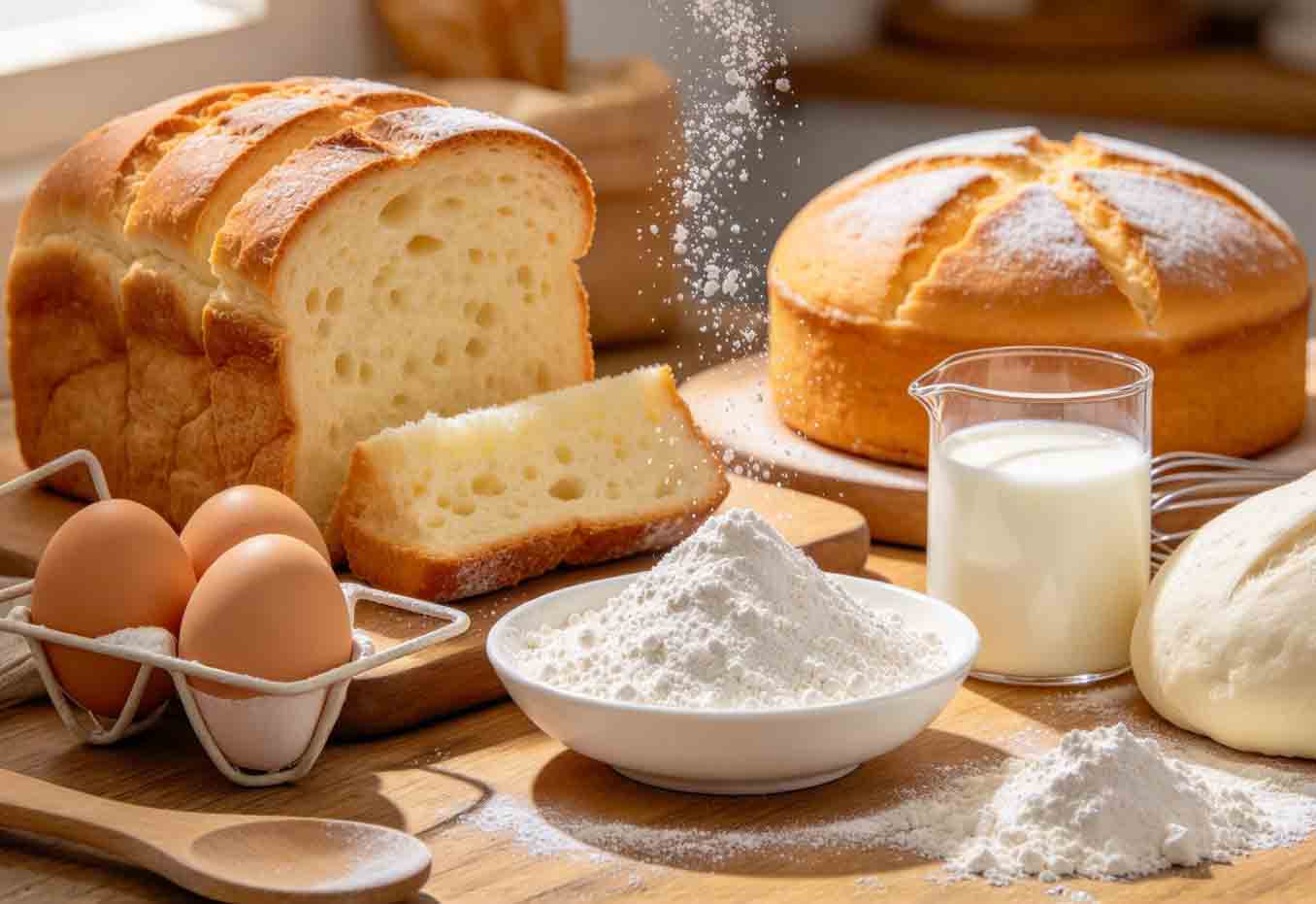
🥖 Introduction: The Role of SSL in Bakery Premixes
Bakery premixes have become an important solution for commercial bakeries and food manufacturers looking to simplify production and maintain consistent product quality. By combining flour, emulsifiers, leavening agents, and other functional ingredients in carefully designed proportions, premixes help streamline ingredient handling and reduce preparation time.
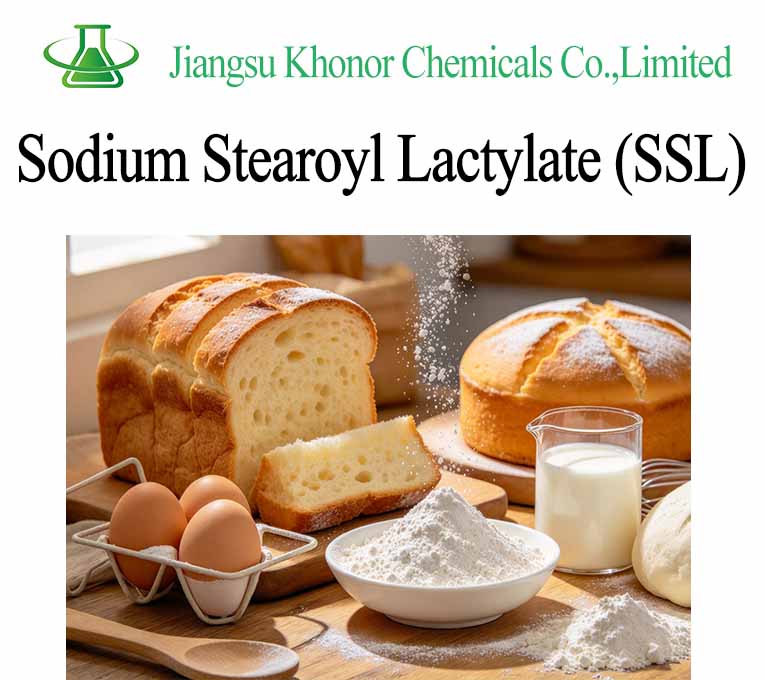
Sodium Stearoyl Lactylate (SSL), also known as E481, is a food emulsifier widely used in bakery applications. It is particularly relevant to bread and roll formulations because of its ability to interact with dough components and support desirable processing and finished-product characteristics.
For manufacturers developing bread premixes, bun premixes, and other dry bakery blends, SSL can be a useful ingredient for improving formulation performance. Its inclusion allows premix producers to incorporate emulsifier functionality into a standardized ingredient system, making it easier for their customers to achieve repeatable baking results.
🔬 What Is Sodium Stearoyl Lactylate (SSL)?
Sodium Stearoyl Lactylate is an emulsifier used in a range of food applications, especially baked goods. It is commonly identified by the food additive number E481.
In bakery formulations, SSL interacts with components of dough, including starch and proteins, helping influence dough properties and the structure of the finished product. Its functionality makes it useful in formulations where dough handling, crumb structure, and product softness are important considerations.
SSL can be incorporated into bakery premixes alongside flour and other dry ingredients. This approach allows premix manufacturers to supply a more complete ingredient solution to industrial bakeries, commercial baking operations, and food manufacturers.
The final performance of SSL depends on the overall recipe, processing conditions, dosage, and interaction with other ingredients. Therefore, formulation testing remains an important step when developing a new premix or optimizing an existing product.
✨ Key Benefits of SSL in Bakery Premixes
🍞 1. Supports Dough Handling and Processing
Dough handling is an important consideration in commercial bread production. Dough consistency can affect mixing, dividing, moulding, and other stages of the baking process.
SSL can help support dough performance in suitable bread formulations. When incorporated into a well-balanced premix, it provides an additional functional ingredient that helps manufacturers optimize processing characteristics according to their specific production requirements.
🥐 2. Helps Improve Crumb Structure
The internal structure of bread influences its appearance, texture, and consumer acceptance. A desirable crumb is generally characterized by a reasonably uniform cell structure and a pleasant eating texture.
SSL can contribute to crumb structure in bread formulations through its interactions with dough components. For premix manufacturers, this functionality can be valuable when developing ingredients for sliced bread, sandwich bread, buns, and other yeast-raised bakery products.
🌾 3. Contributes to Softness and Freshness Characteristics
Softness is an important quality attribute in many commercial bakery products. Consumers often prefer bread and buns with a tender crumb and a pleasant mouthfeel.
SSL is used in certain bakery formulations to help support softness and maintain desirable textural characteristics during storage. Actual results depend on the recipe, moisture content, baking conditions, packaging, and storage environment.
When developing premixes for products with specific texture requirements, manufacturers should evaluate SSL together with the other functional ingredients in the formulation.
⚙️ 4. Supports Consistent Product Quality
Commercial bakeries need formulations that can deliver repeatable results across production batches. Variations in flour properties, ingredient ratios, and processing conditions may influence the quality of finished products.
Including SSL in a standardized premix can help premix producers establish a consistent emulsifier level in each batch. This supports formulation control and makes it easier for downstream customers to reproduce their intended product characteristics.
📦 5. Simplifies Ingredient Preparation
One of the main advantages of bakery premixes is convenience. Instead of weighing and combining numerous ingredients individually, bakeries can work with a prepared blend designed for a particular application.
SSL can be incorporated into dry premixes with flour, enzymes, leavening agents, and other compatible ingredients as required by the recipe. This helps simplify ingredient management and supports standardized production procedures.
🧁 Common Applications of SSL in Premix Formulations
Bread Premixes
Bread premixes are among the key applications for SSL. Depending on the formulation, SSL can contribute to dough performance, crumb structure, and finished-product texture.
It may be considered for premixes used in white bread, sandwich bread, toast bread, and other yeast-raised bread products.
Bun and Roll Premixes
Buns and rolls require a suitable balance of dough handling, volume, crumb texture, and softness. SSL can be incorporated into formulations designed for burger buns, hot dog rolls, dinner rolls, and similar bakery products.
The appropriate formulation will vary according to the desired product characteristics and manufacturing process.
Industrial Bakery Premixes
Large-scale bakeries often prioritize consistent results, efficient ingredient handling, and predictable production performance.
For these applications, SSL can form part of a functional ingredient system designed for specific flour types, processing equipment, and finished-product requirements. Premix manufacturers can evaluate its use alongside other emulsifiers and dough conditioners to achieve the desired balance of performance and cost.
Custom Bakery Ingredient Blends
SSL may also be considered in customized dry blends developed for particular bakery applications. The selection of ingredients depends on the target product, processing method, local regulations, and the technical requirements of the customer.
For premix suppliers serving multiple bakery segments, understanding the intended application is essential when selecting an appropriate SSL grade and determining the formulation strategy.
🧪 How to Incorporate SSL into Premix Development
Successful premix development requires more than simply adding an emulsifier. Manufacturers should consider several factors when evaluating SSL.
Formulation compatibility: Assess how SSL interacts with flour, enzymes, other emulsifiers, and additional functional ingredients.
Dosage optimization: Determine the appropriate inclusion level through trials based on the target product and applicable regulations.
Mixing uniformity: Ensure SSL is distributed evenly throughout the premix to support consistent performance.
Processing conditions: Evaluate mixing time, dough development, proofing, baking temperature, and other relevant process variables.
Finished-product evaluation: Assess loaf volume, crumb structure, softness, appearance, and storage performance as appropriate for the application.
These evaluations help manufacturers identify a suitable formulation while balancing product quality, production efficiency, and ingredient costs.
📋 Factors to Consider When Sourcing SSL
For premix manufacturers and food ingredient distributors, choosing an appropriate SSL supplier is an important part of raw material procurement.
Product Specifications
Review the product specification, including appearance, relevant quality parameters, and other requirements applicable to the intended food application. Confirm that the material meets the customer's formulation and purchasing specifications.
Food Safety and Documentation
Depending on the target market and intended use, buyers may need a Certificate of Analysis (COA), technical data sheet (TDS), safety data sheet (SDS), and other supporting documents. Applicable food additive requirements should also be checked for the destination market.
Packaging and Supply Requirements
Packaging size, storage conditions, shelf life, order quantity, and delivery schedule can all influence procurement decisions. For premix manufacturers, reliable supply is particularly important when SSL is part of an established production formula.
Application Requirements
The best sourcing choice depends on the customer's actual application. Communicating whether SSL is intended for bread premixes, bun premixes, or another bakery blend helps suppliers assess the relevant product specifications and provide more appropriate support.
🤝 SSL Supply for Bakery Premix Manufacturers
Khonorchem supplies Sodium Stearoyl Lactylate (SSL) for food ingredient applications, including bakery formulations and premix production.
We support ingredient buyers, distributors, and food manufacturers with raw material sourcing for their formulation needs. Whether you are developing a new bakery premix or evaluating alternative suppliers for an existing product, we welcome inquiries regarding product specifications, packaging, order quantities, and quotations.
📩 Looking for an SSL supplier for your bakery premix business?
Contact Khonorchem to discuss your requirements and explore a suitable sourcing solution.
🔗 Explore our product range: https://www.khonormineral.com/emulsifier/558.html
Conclusion
Sodium Stearoyl Lactylate (SSL, E481) is a valuable emulsifier to consider in bakery premix development. Its potential contributions to dough performance, crumb structure, softness, and formulation consistency make it relevant to a variety of commercial bread and roll applications.
By selecting suitable raw materials and conducting appropriate formulation trials, premix manufacturers can develop ingredient blends that meet their customers' processing and finished-product requirements.
 English

 Spain
 ruso
 Portuguese
 italiano
 Arabic
 French
 Korean
 German
 Turkish
 Vietnamese
 Indonesian
 Dutch
 Polish
 Far
 Thai





 0086-19851890163
 jane@khonorchem.com
 Rm 1902 Easey Comm Bldg, 253-261, Hennessy RD Wanchai HK