? Detailed Introduction of Menthol
✔ What is Menthol?
Menthol is an organic compound derived from peppermint or produced synthetically. It is well known for its cooling sensation, refreshing minty aroma, and medicinal properties. Menthol is widely used as a flavoring, analgesic, decongestant, and cooling agent in various industries.
✔ Số CAS & Công thức hóa học:
? Thông số kỹ thuật sản phẩm
| Tài sản | Đặc điểm kỹ thuật |
|---|
| Vẻ bề ngoài | Colorless or white crystalline solid |
| Độ tinh khiết (%) | ≥ 99% (Food/Pharmaceutical Grade) |
| Mùi | Characteristic strong mint aroma |
| Melting Point (°C) | 41 – 44°C |
| Vòng quay cụ thể | -49° to -50° |
| Độ hòa tan | Soluble in alcohol, ether, chloroform; slightly soluble in water |
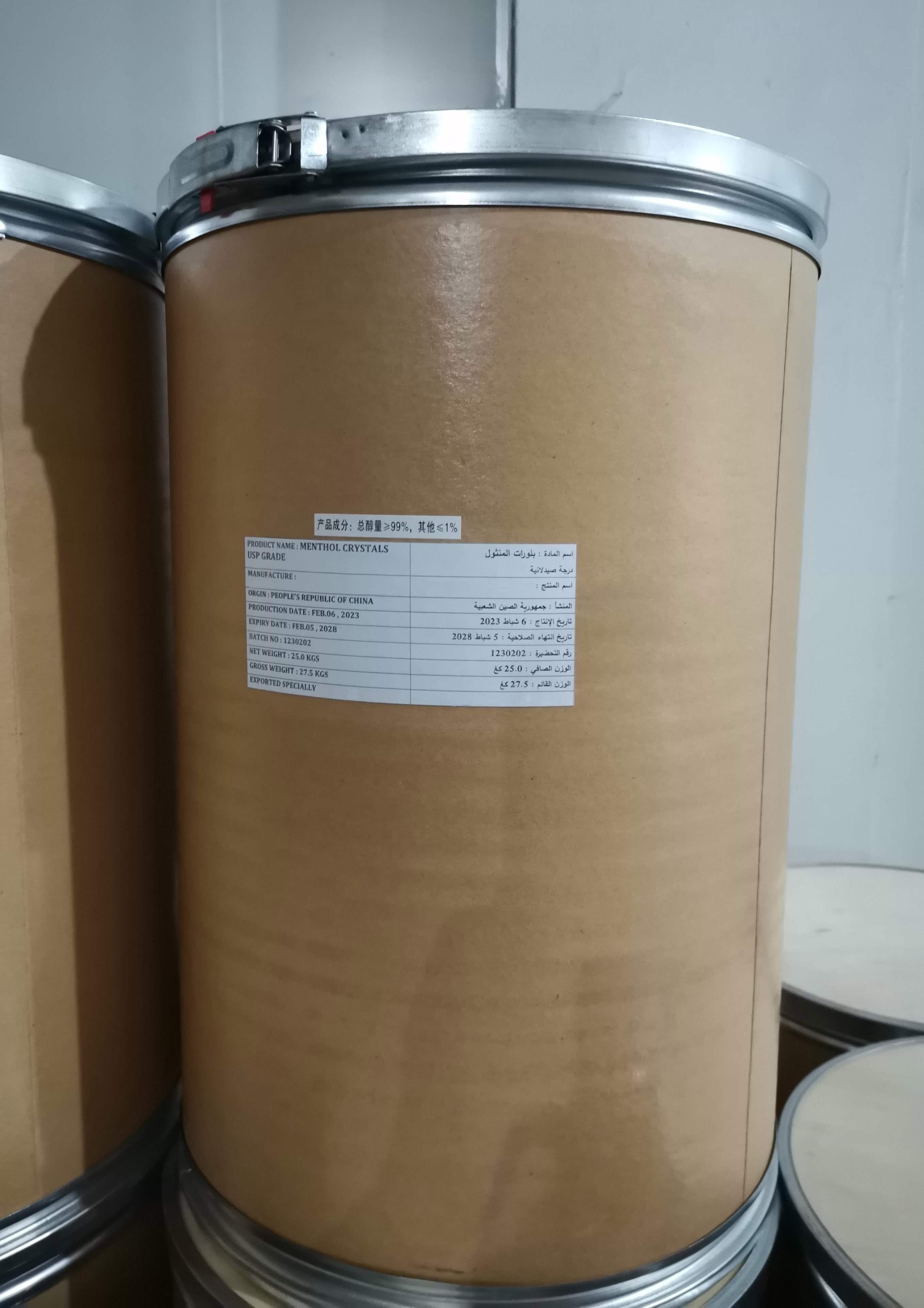
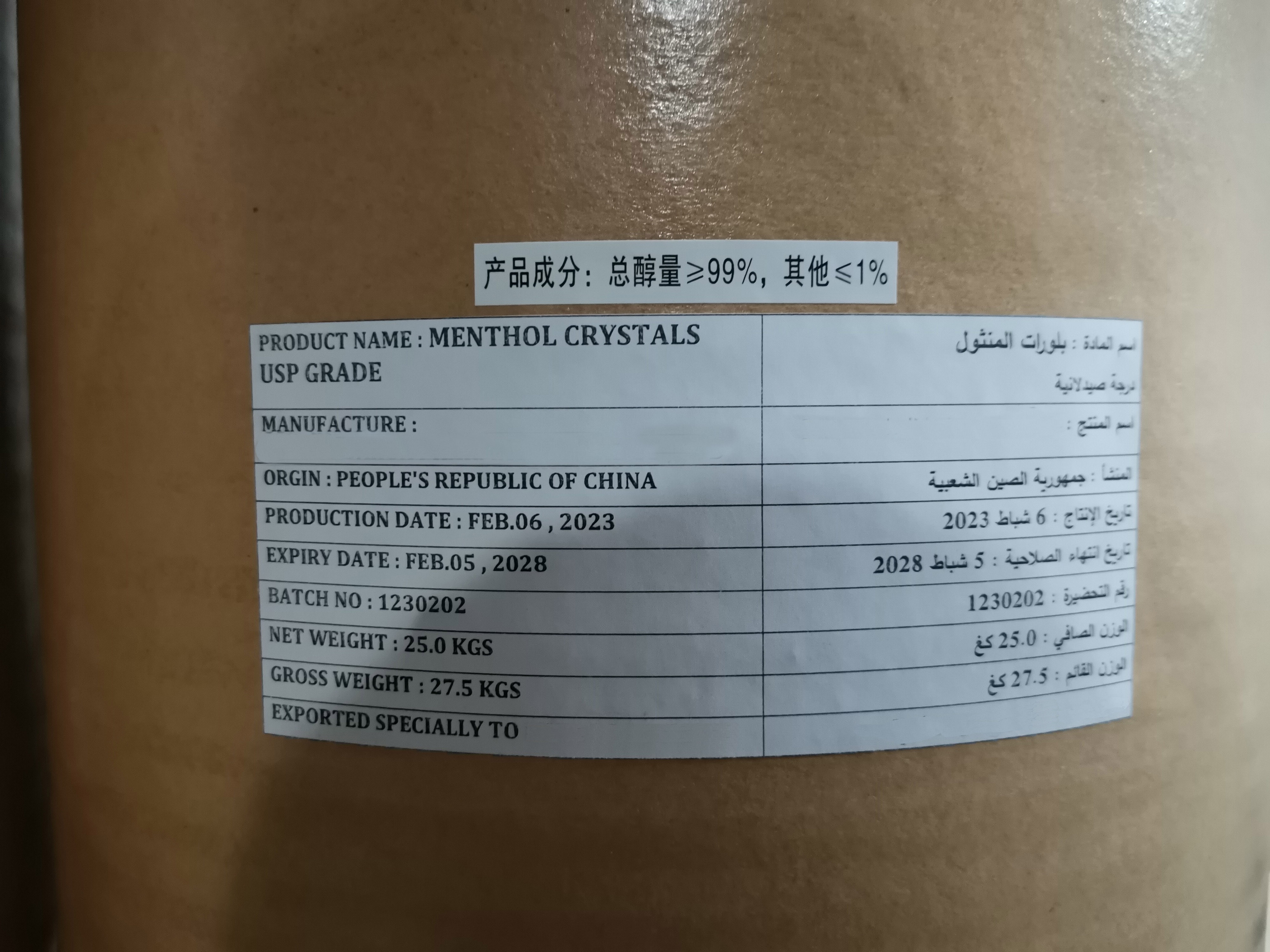
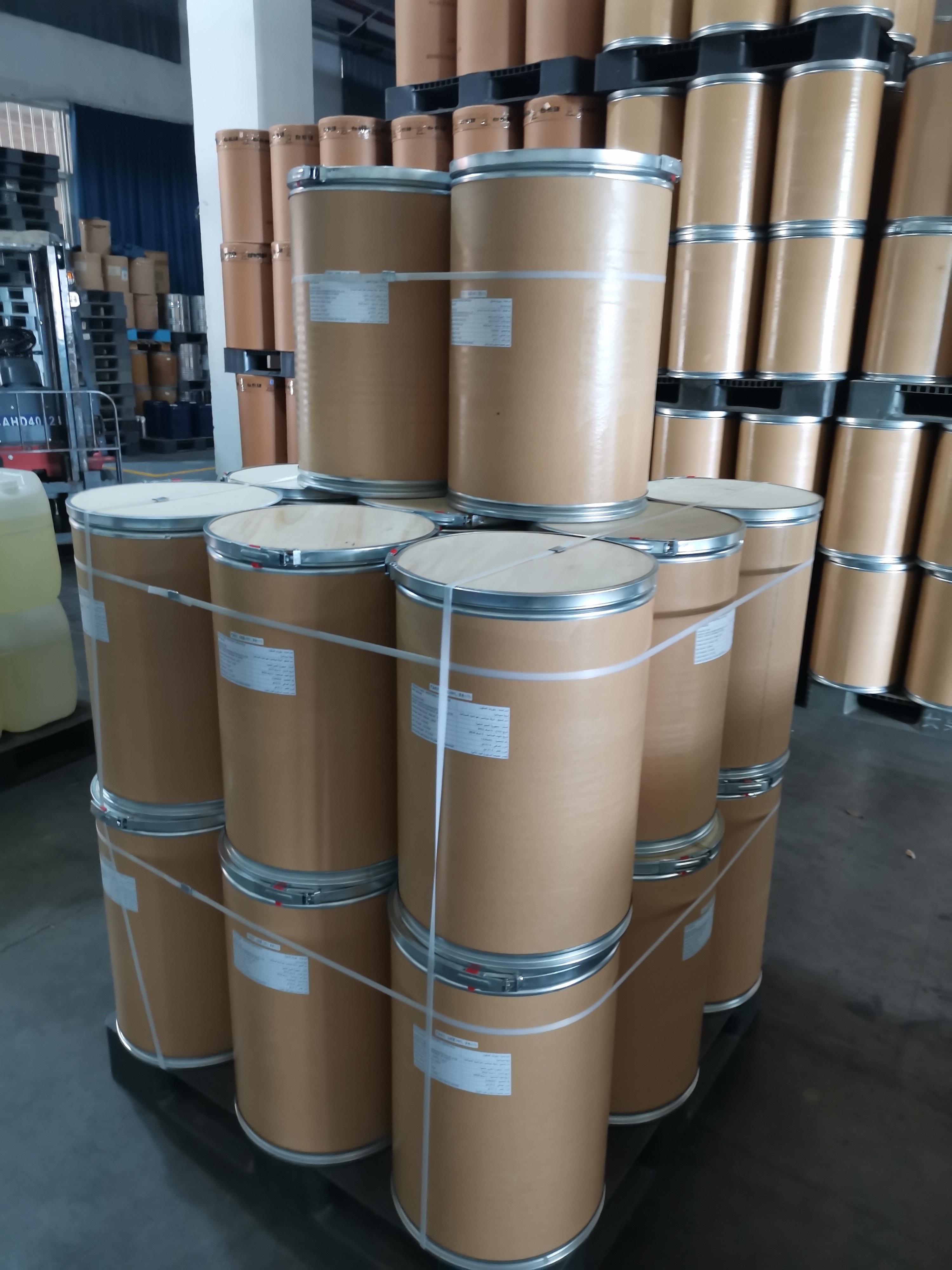
| Đóng gói | 25kg fiber drums or as per customer requirements |
? Applications of Menthol
✔ Ngành thực phẩm và đồ uống
Được sử dụng như mộtflavoring agent in chewing gum, candies, and beverages.
Cung cấp mộtcooling and refreshing taste in confectionery and oral care products.
✔ Ngành dược phẩm
Được sử dụng trongtopical analgesics and pain relief balms for its cooling and soothing effect.
Hoạt động như mộtdecongestant in cough drops, lozenges, and nasal sprays.
Được sử dụng trongoral hygiene products like toothpaste and mouthwash for freshness.
✔ Cosmetic & Personal Care
Thành phần chính trongshampoos, body lotions, and cooling gels.
Được sử dụng trongaftershave and skincare products for a refreshing feel.
✔ Tobacco Industry
✔ Aromatherapy & Fragrance
? How Does Menthol Work?
Cooling Effect:
Flavor & Aroma Enhancement:
Pain Relief & Decongestion:
Cung cấp mộtsoothing effect by interacting with nerve receptors, helping relieve minor aches, congestion, and sore throat symptoms.
? Phương pháp sản xuất & Nguyên liệu thô
✔ Natural Menthol Extraction:
Steam distillation of peppermint oil to extract menthol.
Crystallization process to purify menthol from essential oils.
✔ Synthetic Menthol Production:
? Famous Menthol Brands Worldwide
Tại sao nên chọn Công ty TNHH Hóa chất Khonor Giang Tô?
✔ High-Purity Natural & Synthetic Menthol
✔ ISO & GMP-Certified Manufacturing
✔ Giá cả cạnh tranh & Cung cấp số lượng lớn
✔ Bao bì tùy chỉnh & Phân phối toàn cầu
? Order High-Quality Menthol from Jiangsu Khonor Chemicals Co., Limited!
Tìm kiếm mộttrusted Menthol supplier? Công ty TNHH Hóa chất Khonor Giang Tô cung cấpbulk supply of premium-grade Mentholvìfood, pharmaceutical, and cosmetic applications.
? Liên hệ với chúng tôi ngay hôm nay để được báo giá và dùng thử miễn phí!
Menthol
Name of Index | USP |
Melting point | 42-44 |
NON-VOLATILE MATTER | ≤0.05% |
SPECIFIC ROTATION | -48℃-51℃ |
Độ tinh khiết | ≥99.0 |
Menthol is a naturally occurring compound that is known for its minty, cooling sensation. It is classified as a cyclic monoterpene alcohol and is commonly found in mint oils, especially in Mentha arvensis (wild mint) and Mentha piperita (peppermint). It is widely used in a variety of products, including food, cosmetics, pharmaceuticals, and personal care items, due to its distinctive aroma, flavor, and soothing properties.
Chemical Structure and Properties
Menthol has the chemical formula C₁₀H₂₀O and its structure consists of a six-membered cyclohexane ring with a hydroxyl group (-OH) and a methyl group (-CH₃) attached at specific positions. This structure is responsible for its characteristic cooling effect.
Thuộc tính chính:
Physical state: White crystalline solid at room temperature.
Melting point: 42–44°C (108–111°F).
Boiling point: 212°C (413.6°F).
Độ hòa tan: Sparingly soluble in water but soluble in alcohol, chloroform, and oils.
Odor and taste: Menthol has a strong, minty odor and a sharp, cool taste that can stimulate cold receptors in the skin and mucous membranes.
Nguồn tự nhiên
Menthol is primarily extracted from mint plants, notably peppermint (Mentha piperita) and Japanese mint (Mentha arvensis). In addition to being present in essential oils, menthol can be synthesized from certain natural precursors, though most commercial menthol is now produced synthetically from petrochemical products to meet global demand.
Uses of Menthol
Food and Beverages:
Menthol is commonly used as a flavoring agent in foods like chewing gum, candies, ice cream, and beverages (particularly mint teas and some alcoholic drinks). It adds a cool, refreshing taste and aroma.
Cosmetics and Personal Care:
Menthol is a popular ingredient in a wide range of personal care products, including lotions, shampoos, deodorants, and facial products. It is valued for its cooling effect and is often used to relieve itching, skin irritation, and provide a sensation of freshness.
Dược phẩm:
Menthol is used in topical medications like ointments, balms, and creams for its analgesic (pain-relieving) and cooling properties. It is a common ingredient in cough drops, throat lozenges, and chest rubs (e.g., Vicks VapoRub), where it helps soothe sore throats and alleviate cough symptoms by promoting the feeling of airways opening.
Menthol is also found in products aimed at relieving muscle and joint pain, as it helps reduce inflammation and provides temporary relief from discomfort.
Tobacco Products:
Menthol has been historically added to cigarettes and smokeless tobacco products to enhance flavor, mask the harshness of tobacco, and provide a cooling effect when inhaled. The use of menthol in cigarettes has been a subject of regulatory concern, especially regarding its role in increasing smoking initiation and addiction, particularly among younger smokers.
Aromatherapy:
Mechanism of Action (Cooling Sensation)
Menthol produces its characteristic cooling effect through its interaction with the TRPM8 receptor, a temperature-sensitive receptor found in sensory neurons. When menthol binds to this receptor, it triggers a response in the body that mimics the sensation of coolness, even though the temperature itself has not changed. This cooling sensation is why menthol is so effective in topical ointments for pain relief, as it can soothe irritated skin and muscle tissues.
Health and Safety Considerations
While menthol is generally considered safe when used in moderate amounts, excessive consumption or topical application can lead to adverse effects, including:
Skin Irritation: Prolonged contact with high concentrations of menthol may cause redness, burning, or irritation.
Respiratory Effects: Inhalation of menthol vapors in high concentrations may cause respiratory irritation or discomfort in some individuals.
Toxicity: In rare cases, ingesting large quantities of menthol can lead to symptoms such as nausea, vomiting, abdominal pain, and even more severe toxic reactions.
Synthesis of Menthol
In addition to being sourced from natural plants, menthol can be synthesized in laboratories. The process often starts with pulegone, a compound derived from peppermint oil, which is then hydrogenated to produce menthol. Synthetic menthol is indistinguishable from natural menthol and is typically less expensive to produce at large scales.
Phần kết luận
Menthol is a versatile and widely used compound with applications across multiple industries, from food and cosmetics to pharmaceuticals and tobacco. Its distinctive cooling effect, refreshing flavor, and soothing properties make it an indispensable ingredient in a wide range of products. However, like any compound, its use should be regulated to avoid potential adverse effects in sensitive individuals.
 Tiếng Anh

 Tây ban nha
 Tiếng Nga
 Bồ Đào Nha
 tiếng Ý
 Tiếng Ả Rập
 Tiếng Pháp
 Hàn Quốc
 tiếng Đức
 Thổ Nhĩ Kỳ
 Tiếng Việt
 Tiếng Indonesia
 người Hà Lan
 Đánh bóng
 Xa
Xa Thái
Thái


 0086-19851890163
  jane@khonorchem.com
 Phòng 1902 Tòa nhà Easey Comm, 253-261, Đường Hennessy, Wanchai HK